
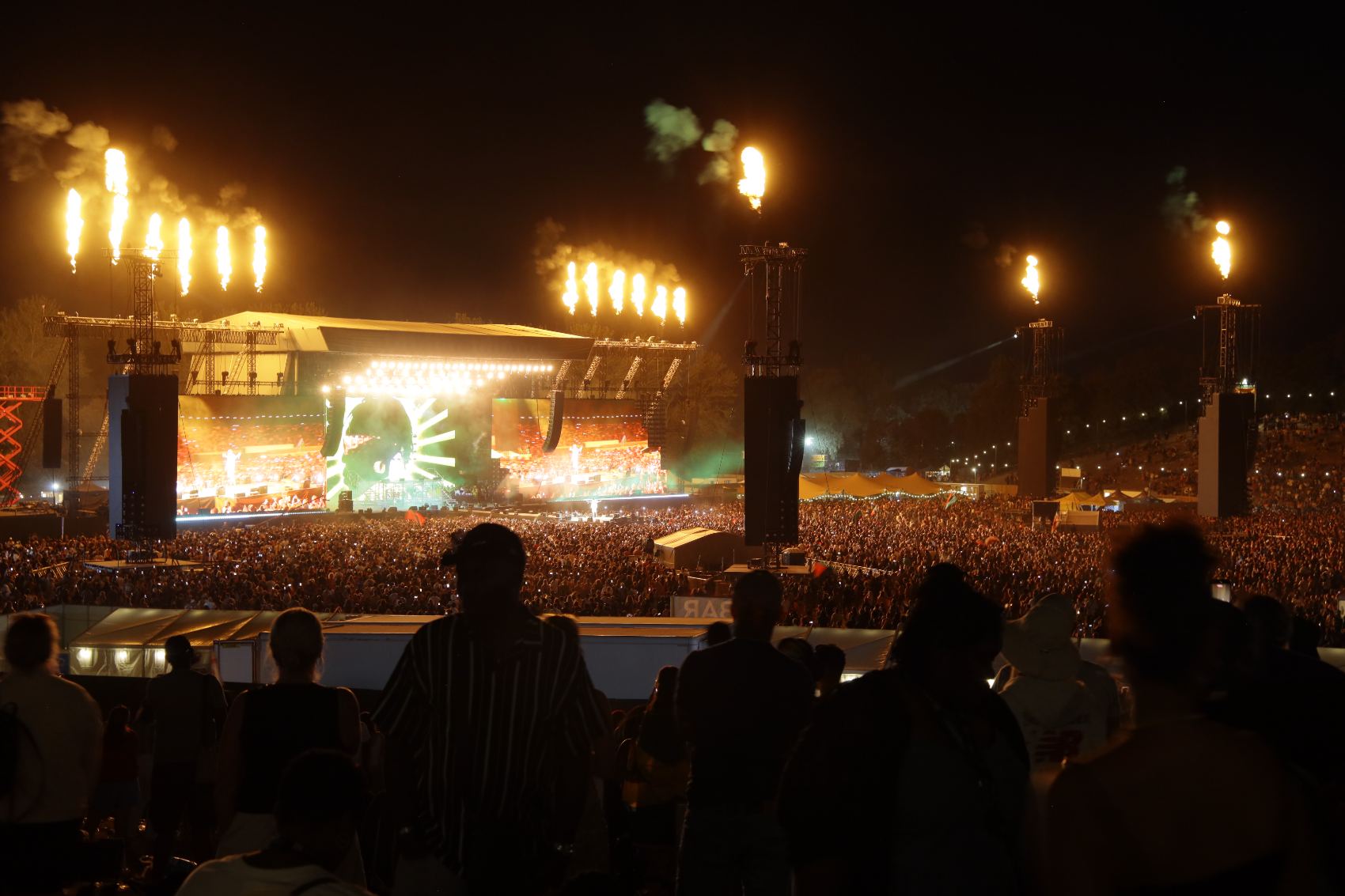
A static wide on a video wall is worse than no wall at all.
IMAG is unforgiving in a way streaming is not. The audience can see the stage and the screen at the same time, so they are comparing the two constantly. A loose framing, a late cut or a camera left on the wrong person is noticed by ten thousand people at once.
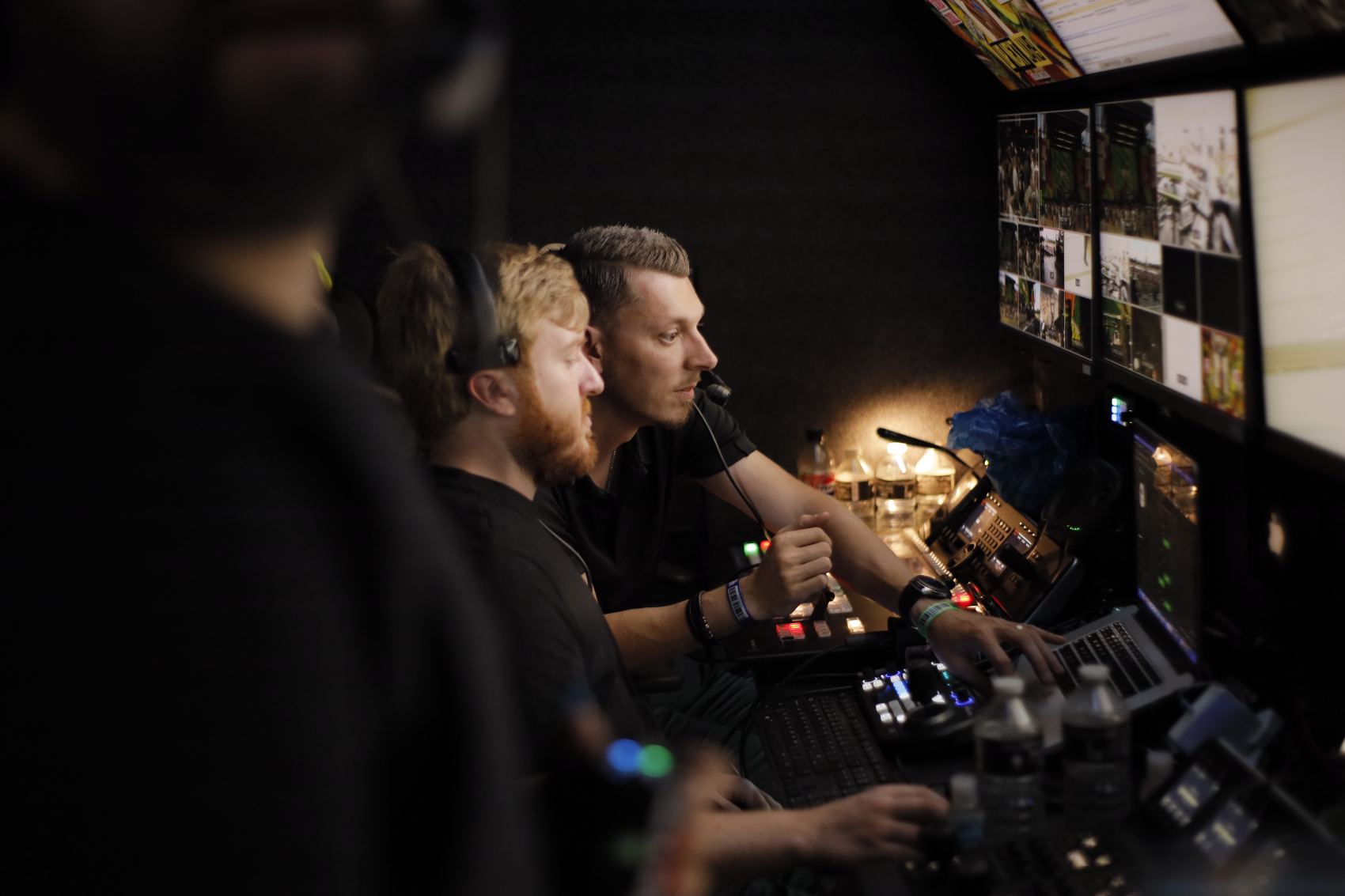
Which is why the camera count is the least interesting part. What makes IMAG work is somebody cutting it who knows the show, positions that were agreed with the lighting designer rather than found on the day, and framing built for a screen that size rather than for a laptop.
We do this on main stages, in arenas and in conference halls. Screens and processing usually come from the AV supplier already on the job. We produce the picture that goes on them.
What makes it work
Cutting, not just capturing.
Questions about IMAG.
What does IMAG actually mean?
Image magnification. Live camera feeds cut to the screens in the room so the people at the back can see what is happening on stage. It is a different job from streaming, because the audience is in front of you and comparing the screen to the real thing a hundred metres away.
How many cameras does IMAG need?
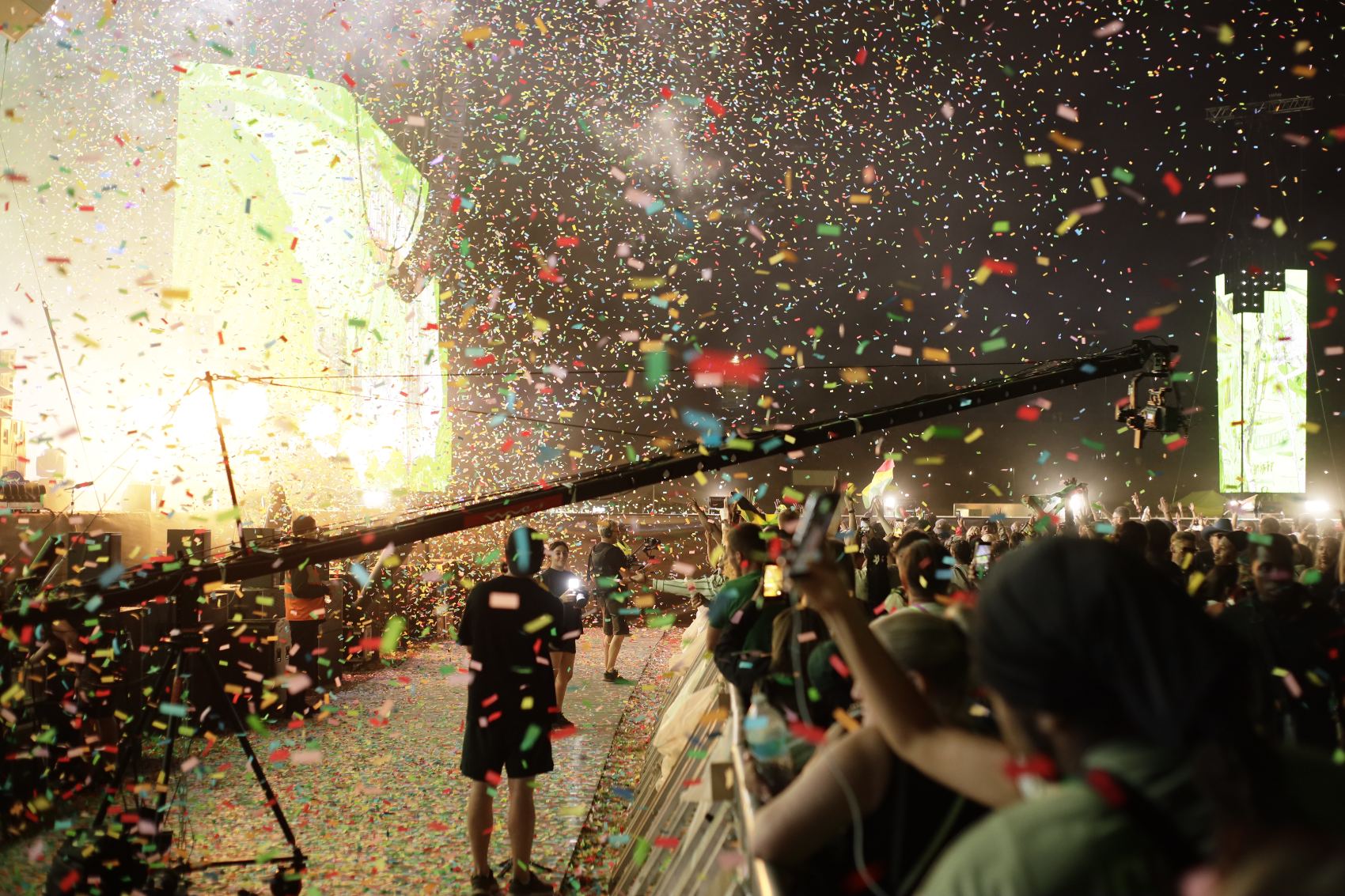
Four or five covers most stages: a wide, a long lens at front of house, one each side of the stage and something roving for the crowd. Two cameras and nobody cutting them is where IMAG goes wrong, because a static wide on a big wall is worse than no wall at all.
Do you supply the screens as well?
No. We produce the picture that goes on them. Screens, LED walls and processing normally come from the AV or lighting supplier already on the job, and we work alongside them rather than duplicating what they are already providing.
Can the same rig feed the screens and a stream?
Yes, and it is usually the sensible way to do it. One production drives the video walls, a delay screen at the back of the field and a broadcast feed, rather than paying for two crews doing overlapping work.
Does IMAG work for conferences as well as music?
Yes, and the value is arguably higher. In a large conference hall the person in row forty cannot see a facial expression or a slide detail, so screens carrying a properly cut feed are the difference between watching a speaker and following one.
What about delay towers and overflow rooms?
Same production, extra outputs. A delay tower at the back of a field or a screen in a second room is straightforward once the picture is being cut properly in the first place.
When is IMAG not worth it?
If the room is small enough that everybody can already see the stage, screens add cost and a distraction rather than helping. We will tell you that rather than quoting for cameras you do not need.
IMAG work.
Got screens to fill?
Tell us the venue, the stage and who is supplying the walls, and we will tell you what it takes to make them worth looking at.