
Case studyArena · IMAG
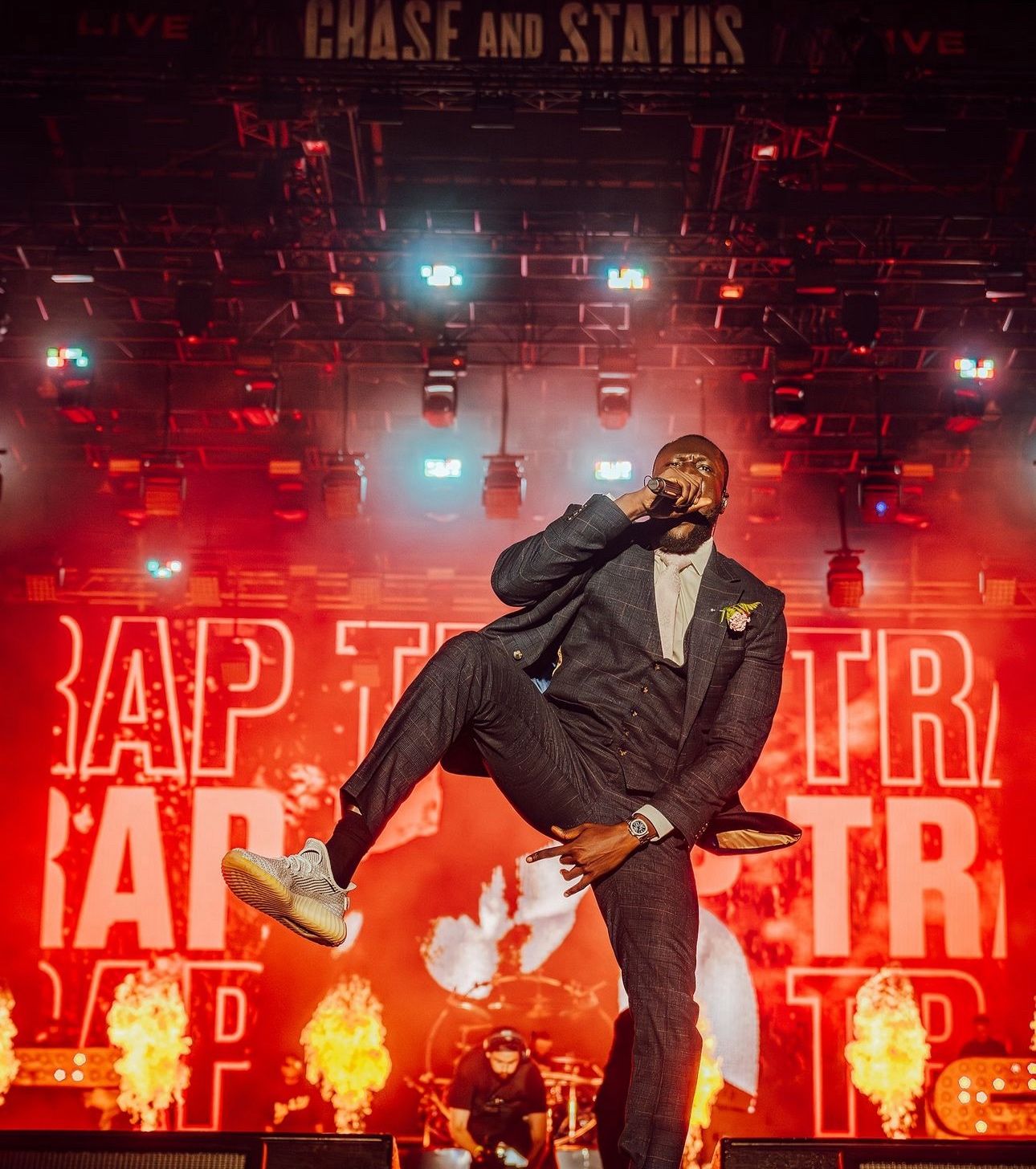
Chase & Status, Milton Keynes National Bowl
Forty-five thousand people at the National Bowl. Five dwmedia cameras and three crew, with a shared jib and RF camera from another supplier on site.
- Client
- UK Events Group
- Venue
- National Bowl, Milton Keynes
- Sector
- Festival, live music
- Services
- IMAG and screens, multi-camera production
- Scale
- 45,000 on site
- Crew
- Three
- Rig
- Five dwmedia cameras, plus a shared jib and RF camera
The brief
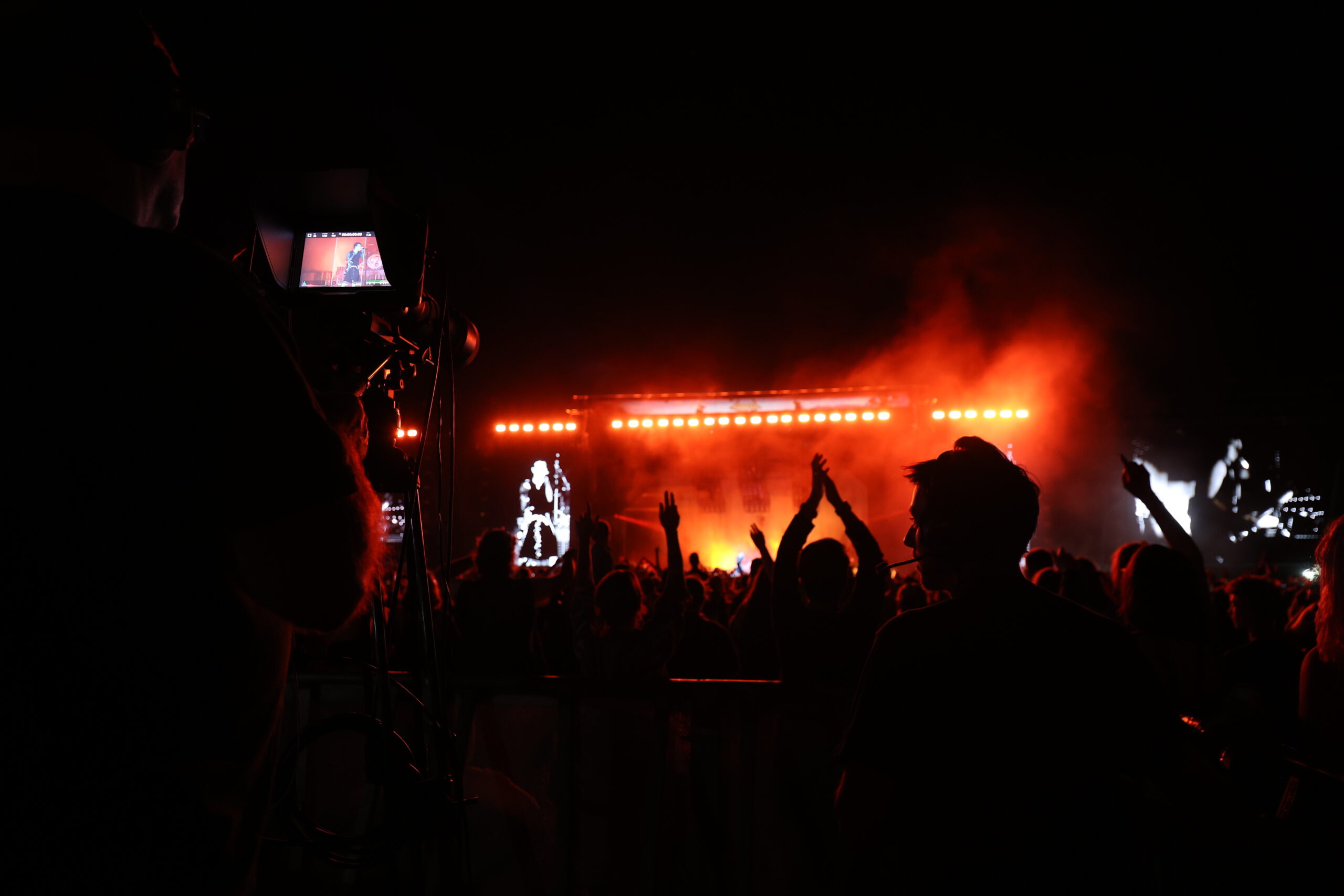
Chase & Status headlined Milton Keynes National Bowl to an audience of forty-five thousand. UK Events Group brought dwmedia in to feed the video walls.
It was one of three headline shows we covered at the Bowl inside the same week, alongside Bludfest and Reggae Land. The rig stayed where it was for all three, which is the part worth understanding.
What made it challenging
At forty-five thousand people in a natural amphitheatre, almost nobody has a good view of the stage. The people on the rail do. Everybody else is watching a screen, and the screen is the show.
That changes what the cameras are for. This is not coverage in the broadcast sense, where a viewer at home can be trusted to follow a cut. It is the primary way most of the audience experiences the performance, projected several metres wide, at night, to a crowd who paid to be there.
Soft focus is obvious at that size. A late cut is obvious. A shot held two seconds too long reads as a mistake rather than a choice, because forty-five thousand people are looking at it simultaneously and the reaction is audible.
We ran five cameras of our own, and another production company on site gave us access to their jib and RF camera, both of which they were also filming with. So the mix had seven sources in it, five of them ours.
Five is a deliberate number rather than a budget compromise. On a stage this wide you need a locked wide that always works, a long lens that can find a face from front of house, and enough mid-range coverage to cut between them without repeating yourself across a ninety-minute set. Adding cameras beyond that only helps if there is someone to cut them properly.
The shared jib and RF are the interesting part. Movement and a roaming angle are exactly what a static five-camera rig cannot give you, and sharing them off another supplier’s rig costs a conversation rather than a second crew. It only works if both galleries agree how the sources are shared and who has priority when both want the same shot, which is a coordination job rather than a technical one.
Three crew, and why that is the interesting part
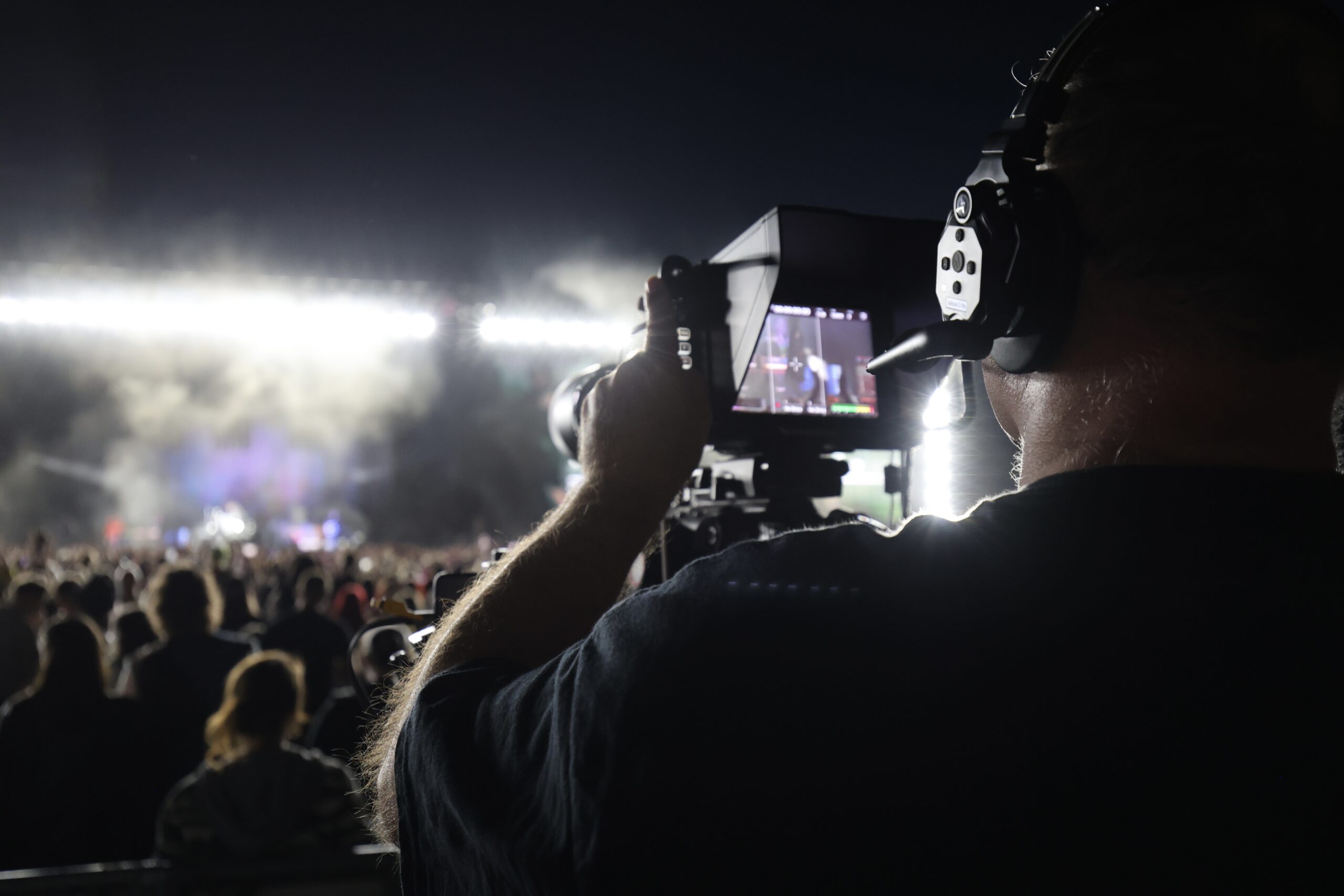
An arena-scale IMAG job on this site would conventionally carry more people. Three worked because the rig was designed around the crew count rather than the crew being fitted around the rig, and because two of the seven sources in the mix were operated by somebody else.
That means positions chosen so nobody is running between them, a vision mix within reach of the person who also has to keep an eye on the walls, and camera choices that survive an operator being briefly occupied elsewhere. It is a different design problem from scaling up, and it is the one that actually comes up in a quote.
The value of it for a promoter is straightforward. A smaller crew on the same standard is a cheaper day, and the audience cannot tell the difference from where they are standing.
One rig, three shows
On a site like the Bowl, where everything arrives on a vehicle and nothing is fixed in place, the expensive parts of the job are the build and the learning. Both are paid once when three shows share a rig across one week, which is what happened here.
It is the same arithmetic that makes a touring run cheaper per night than the same dates booked separately, applied to a week rather than a month. It also means a promoter holding the site for several events is buying one production rather than three, which is the version of this that shows up on a budget.
The result
Forty-five thousand people served by five dwmedia cameras and three crew, with a shared jib and RF camera adding the movement. Two further headline shows followed on the same rig that week at no additional build cost.
The National Bowl is the venue we have worked most. Reggae Land has booked us back four consecutive years since 2023, and Tribes Unite has run there too.
Arena-scale IMAG is a shot discipline problem before it is a kit problem. The screen is the show for most of the room, and it either holds up at that size or it does not.